📚 CULTURE HUB
Kipsigis Heritage Stories
Preserving Oral Traditions, Wisdom, and Ancestral Memory
Stories of Our Heritage
Long before written records, our ancestors preserved knowledge through stories. These oral narratives carried history, wisdom, bravery, migration journeys, ceremonies, and the identity of our people.
This archive seeks to preserve and share Kipsigis heritage stories for current and future generations.
Featured Story
Saket_ap Eito Ceremony
The sacred ceremony where leadership, guardianship, and responsibility for the land passed from one age-set to another.
The Origin of the Kipsigis
Origins
Oral traditions describe the emergence and identity of the Kipsigis people.
Migration and Settlement
Migration
Stories of movement, resilience, and eventual settlement in fertile lands.
Koitalel and Resistance
Heroes
The story of courage, leadership, and resistance against colonial forces.
Traditional Homestead Life
Traditional Life
Daily life, family structure, livestock keeping, and responsibilities.
Traditional Naming Ceremony
Ceremonies
How children were named and ancestral names preserved through generations.
Legends of Brave Warriors
Legends
Stories celebrating bravery, hunting, protection, and heroic deeds.
Traditional Kipsigis Marriage (Keeseet)
Ceremonies
A sacred cultural journey of courtship, negotiations, dowry, blessings, and traditional marriage rites.
The Role of Elders
Traditional Life
Elders guided justice, wisdom, ceremonies, and conflict resolution.
Mugeni arap Mondi: The Prophetic Seer
Legends
The remarkable story of Barng’tuny arap Kosgey, whose visions appeared impossible— until history proved many of them true.
The Legend of Chemosit
Legends
A chilling traditional tale of the mysterious night creature feared across Kipsigis folklore.
Lelo: The Great Wrestler
Legends
The legendary wrestler of Kapkimolwa whose unmatched strength lives on in song and memory.
Traditional Initiation Ceremony
Ceremonies
A sacred rite of passage marking the transition from childhood to responsible adulthood.
Seetyot: The Biological Calendar
Ceremonies
The fascinating story of a mysterious flowering plant that once helped the Kipsigis measure time, age-sets, and sacred ceremonies.
Saket-ap-Eito: The Handover Ceremony
Ceremonies
The sacred ceremony where leadership, guardianship, and responsibility for the land passed from one age-set to another.
Koitalel arap Samoei and the Resistance
Named after a white stone, Koitalel arap Samoei, as he was fondly known, was the last-born son of the great Nandi Orgoiyot Kipnyolei arap Turugat. He was born in Samitu, Aldai in 1860.
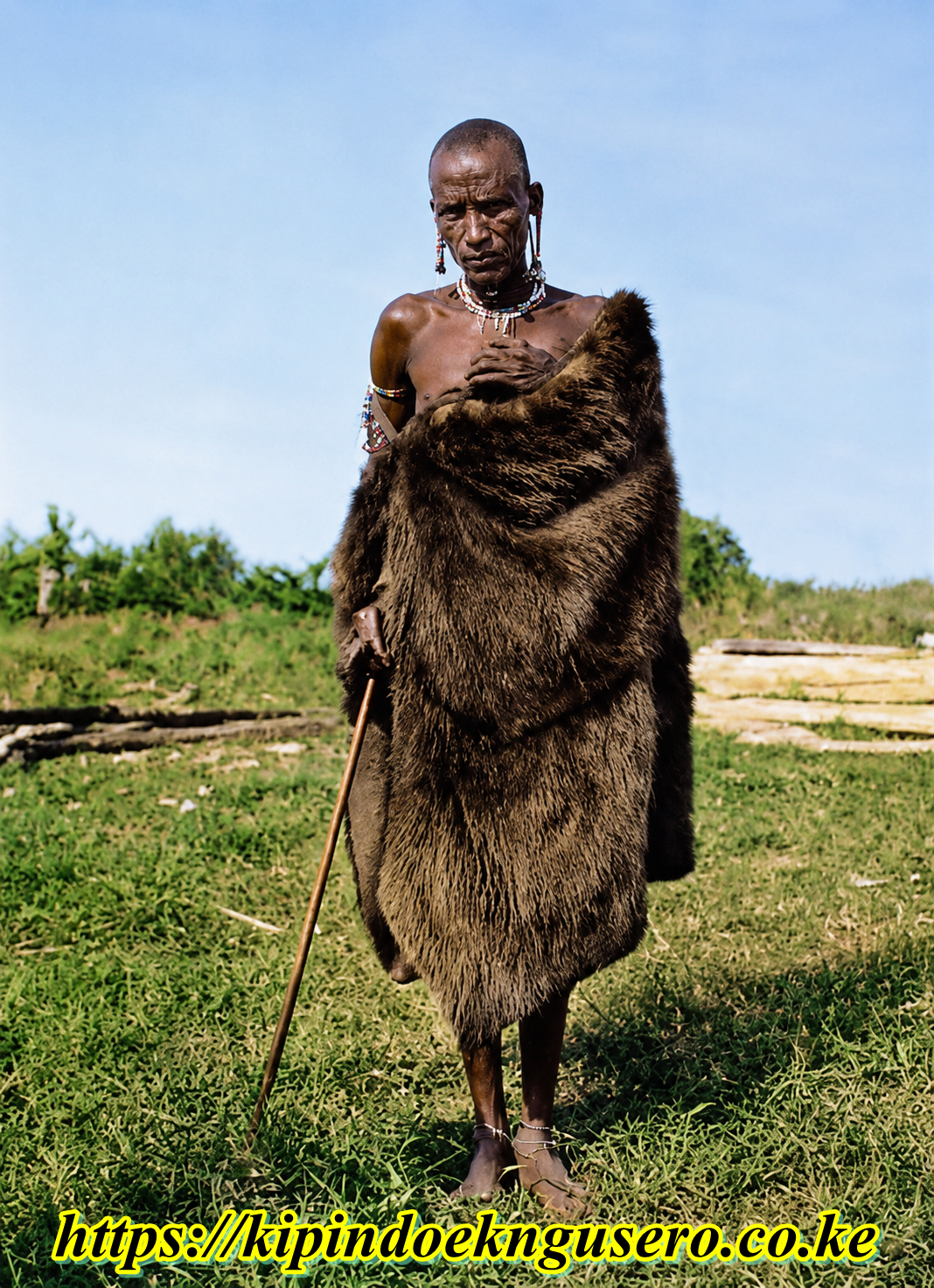
Historical photograph of Koitalel arap Samoei, the revered Nandi Orkoiyot and resistance leader remembered for his courage in opposing colonial expansion.
From his earliest days, Koitalel appeared destined for greatness. Shortly after his birth, some of his stepmothers questioned his legitimacy. To settle the matter, his father ordered the toddler to be placed at the entrance of the homestead as cattle returned in the evening, declaring that if the child survived without being trampled, he would indeed be his son and rightful spiritual heir.
Remarkably, the cattle avoided the child completely. This event was seen as a divine sign, confirming Koitalel’s destiny as successor to his father.
Although the youngest among many sons, Koitalel shared a unique bond with his father due to his remarkable understanding of prophecy and interpretation of signs.
One famous story tells of Kipnyolei gathering his sons around a pot of traditional brew (busaa) and asking them to silently interpret what they saw. Koitalel saw heavily armed white men killing African people. Angered, he drew his sword and declared:
“I am seeing white men killing our people.”
His father, irritated that he had spoken instead of silently observing, uttered words believed to be prophetic:
“Barin biik che lelach”
“May the white people kill you.”
After his father's death, Koitalel became the Nandi Orgoiyot in 1890. He reorganized Nandi resistance into a disciplined fighting force that repeatedly disrupted British railway construction across Nandi territory.
On April 5, 1902, Koitalel’s men raided Kibigori Railway Station. In retaliation, British Deputy Commissioner Hobley demanded 300 cows as punishment. Rather than surrender, Koitalel intensified attacks, even striking the railway in daylight.
The colonial government responded with approximately 2,000 soldiers. Though the Nandi fought with spears, shields, and poisoned arrows, they fiercely resisted. The British reportedly killed around 100 Nandi warriors and seized 4,800 cattle, but resistance continued.
On September 26, 1905, Colonel Richard Meinertzhagen launched another campaign and proposed a peace meeting.
Trusting the agreement, Koitalel attended a meeting at Ketbarak with only a few companions. Unknown to him, Meinertzhagen had hidden over 80 armed soldiers nearby.
On October 19, 1905, upon arrival for the so-called peace meeting, Koitalel was treacherously shot by Meinertzhagen, alongside many of his closest aides.
Even Meinertzhagen later admitted guilt, writing:
“My drastic action on this occasion haunted me for many years.”
Koitalel was succeeded briefly by his brother Kipeles arap Tamasun, and later by his son Barsirian arap Manyei, who became one of the longest-held colonial prisoners in Kenyan history before his release in 1964.
Today, Koitalel’s courage, sacrifice, and resistance are honored through the Koitalel arap Samoei Mausoleum in Nandi Hills and Koitalel Samoei University College.
Legends of Brave Warriors
Legends of Brave Kipsigis Warriors
Courage, protection, sacrifice, and honor formed an important part of traditional Kipsigis society. Warriors were respected defenders of the community, protectors of livestock, guardians of families, and symbols of bravery.
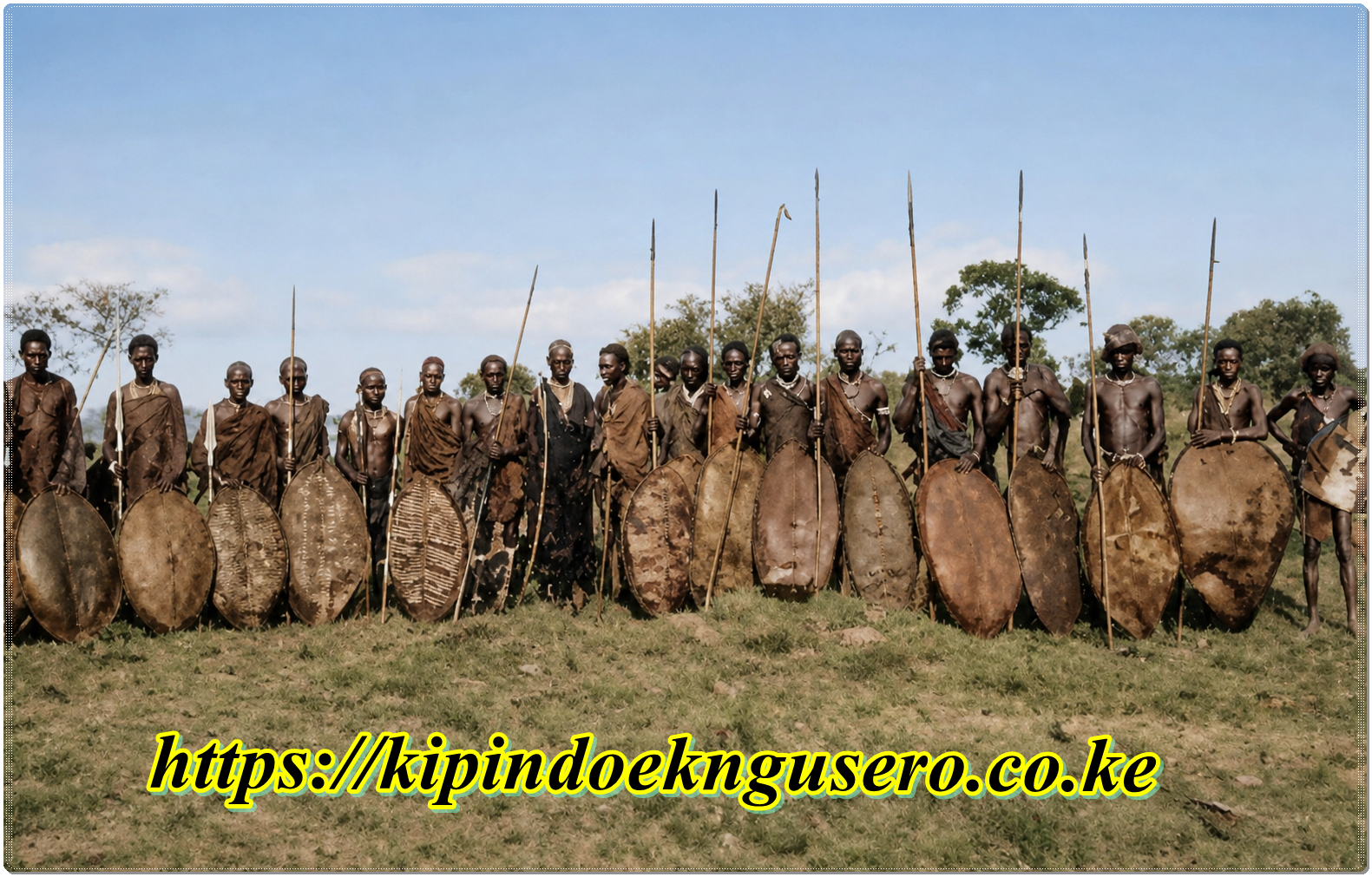
Artistic representation of the brave Kipsigis warriors who defended their people, livestock, land, and cultural dignity with courage and honor.
The Warrior Spirit
Young men were prepared through discipline, cultural instruction, endurance, and initiation into adulthood. Bravery was admired, but courage was expected to serve the community—not personal pride.
Warriors were expected to:
- Protect families and settlements
- Defend livestock from raiders and predators
- Demonstrate courage and endurance
- Respond during conflict
- Honor community values and leadership
Heroic Names and Deeds
Exceptional bravery earned lasting recognition, often preserved through names. Many heroic names began with Bar, symbolizing greatness.
Examples include:
- Barkutwo – Hero who brought a crown from a raid
- Barchilei – Hero who brought spear metal from battle
- Bartonjo – Destroyer of enemies
- Barngetuny – One who killed a lion
- Bartore – Hero who killed a warthog bare-handed
- Bartiony – One who killed a giant python alone
- Barngok – Hero who defeated a fierce enemy dog
Weapons of the Warrior
Traditional warriors used simple but effective weapons, including:
- Spears
- Shields
- Poisoned arrows
- Swords
- Protective gear
Skill, speed, courage, and knowledge of terrain often mattered as much as weaponry.
Defense of Community
Warrior legends often emerged during:
- Livestock raids
- Territorial defense
- Protection from wild animals
- Inter-community conflicts
- Resistance against external threats
Their courage ensured survival and protected the dignity of the people.
The Moral of Warrior Legends
These stories were not simply tales of violence—they taught:
- Bravery
- Discipline
- Loyalty
- Sacrifice
- Responsibility
- Protection of the weak
Around evening fires, elders used these stories to inspire younger generations.
The Legend of Chemosit
The Legend of Chemosit
Among Kipsigis oral traditions, few legends inspired as much fear and fascination as the story of Chemosit, a mysterious creature said to roam forests, lonely paths, and isolated settlements at night.

Artistic representation of Chemosit — the mysterious creature of Kipsigis folklore, feared in traditional tales as a symbol of danger, mystery, and the unknown.
The Creature of the Night
Elders described Chemosit as a terrifying being with unusual appearance, strange sounds, and frightening habits. Some described it as part-human, part-beast, while others believed it was a spirit creature.
Stories said Chemosit:
- Appeared at night
- Lurked near forests and lonely places
- Made strange cries
- Targeted careless travelers
- Inspired fear among children and adults alike
Warnings from Elders
Parents and elders often used Chemosit stories to teach caution and discipline.
Children were warned:
- Do not wander at night
- Stay close to home after dark
- Respect warnings from elders
- Avoid dangerous forests or isolated places
Possible Interpretations
Some believe Chemosit stories may have originated from:
- Encounters with dangerous wild animals
- Fear of unknown nighttime threats
- Warnings against kidnappers or hostile strangers
- Symbolic storytelling to protect children
Others regard Chemosit purely as folklore.
A Story That Endures
Even in modern times, the name Chemosit remains recognizable in Kipsigis cultural memory, representing mystery, fear, and the power of oral storytelling.
Seetyot: The Biological Calendar of the Kipsigis
Seetyot: Nature’s Calendar
Long before printed calendars, clocks, or modern record keeping, the Kipsigis people observed nature carefully to measure time. Among the most fascinating natural timekeepers was a remarkable wild shrub known as Seetyot (Mimulopsis).
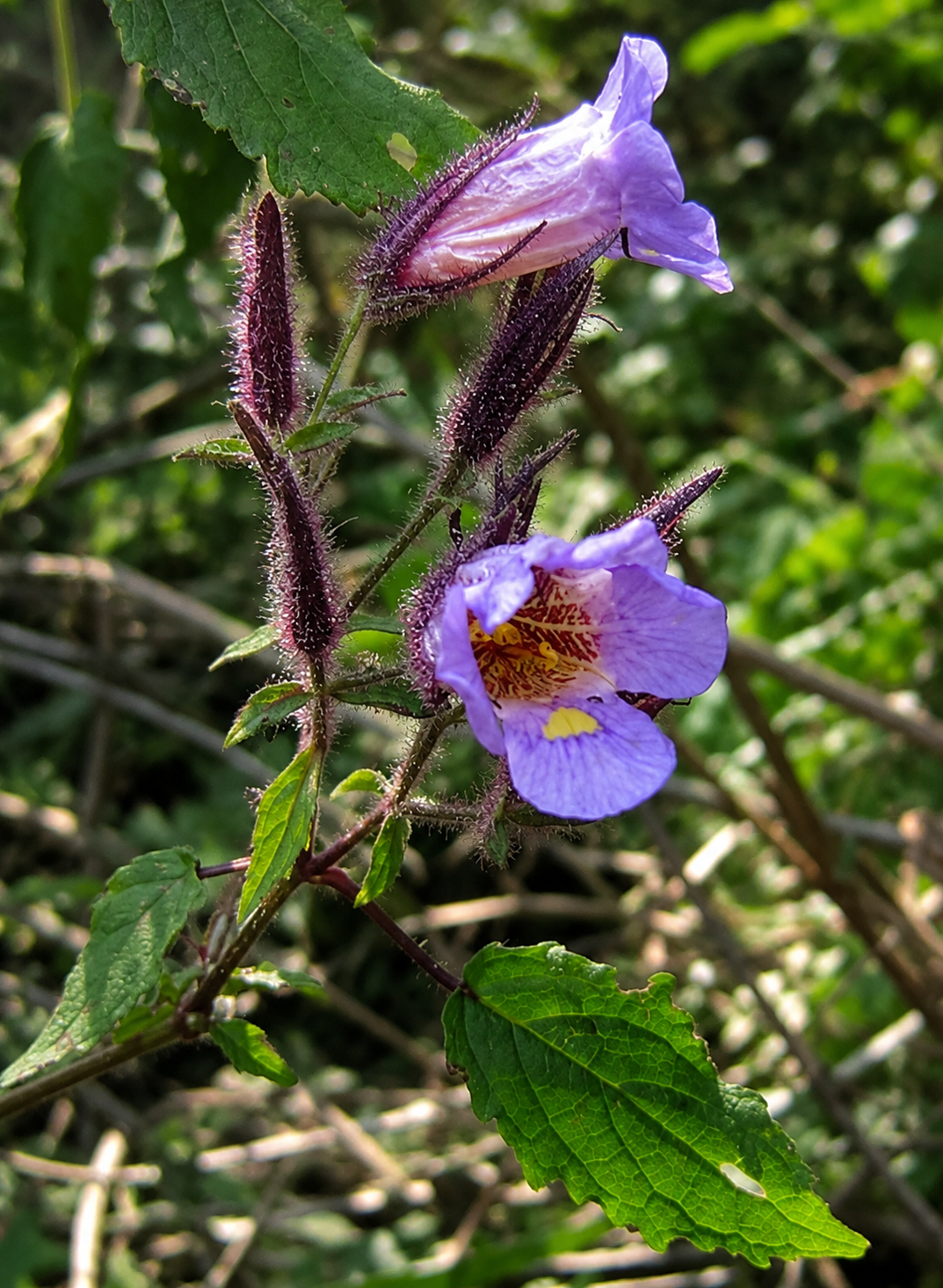
Seetyot (Mimulopsis) — the remarkable flowering plant that once served as a natural biological calendar for ceremonial timing among the Kipsigis.
This extraordinary plant was not merely part of the landscape—it served as a biological calendar, helping elders organize ceremonies, age-set transitions, and important social milestones.
The Mysterious Bloom
Unlike ordinary plants that flower yearly, Seetyot blooms dramatically in synchronized cycles, often only once every seven to eight years.
When entire patches of Seetyot suddenly burst into bloom, it was no ordinary botanical event. It was a signal to the community that time itself had reached an important turning point.
The Calendar of Initiation
Traditional Kipsigis and related Kalenjin communities organized age-sets, initiation cycles, and ceremonial timing around this flowering pattern.
Elders observed Seetyot carefully because:
- Initiation seasons opened or closed in relation to its cycles
- Age-set transitions were coordinated around it
- Major ceremonial timing depended on its appearance
- Social generations could be tracked through natural rhythms
It was a living clock built by nature itself.
Sagetab Eito and Sacred Timing
The famous Sagetab Eito ceremony was also connected to this rhythm. Certain rites were expected only during appropriate periods in relation to Seetyot cycles.
There were even strong traditional beliefs that some ceremonies should not occur during particular flowering periods.
The year following Seetyot flowering was often regarded as a sensitive ceremonial period known as Karatet.
Honey Season
Seetyot flowers produced abundant nectar, attracting large numbers of bees. This meant flowering years were also seasons of plentiful honey.
Honey held practical and ceremonial importance:
- Food for celebrations
- Cultural significance in ceremonies
- Symbol of abundance
- Important traditional resource
Wisdom Without Written Calendars
The brilliance of this system lay in observation. Without printed dates or digital tools, elders tracked social time through ecology.
This reflected a profound understanding of:
- Nature cycles
- Plant behavior
- Generational timing
- Community organization
Modern Reflection
Today, modern calendars have replaced Seetyot’s practical role, but its story remains one of the most fascinating examples of indigenous African environmental knowledge.
Seetyot reminds us that our ancestors read the land, the forests, and the seasons with extraordinary intelligence.
Saket-ap-Eito: The Transfer of Generations
Saket-ap-Eito: When a Generation Took Charge of the Nation
Among the Kipsigis and related Kalenjin communities, few ceremonies carried as much weight, dignity, and national significance as Saket-ap-Eito. This was not merely a ritual gathering—it was the solemn ceremony through which leadership, protection, and responsibility for the country passed from one generation of warriors to another.
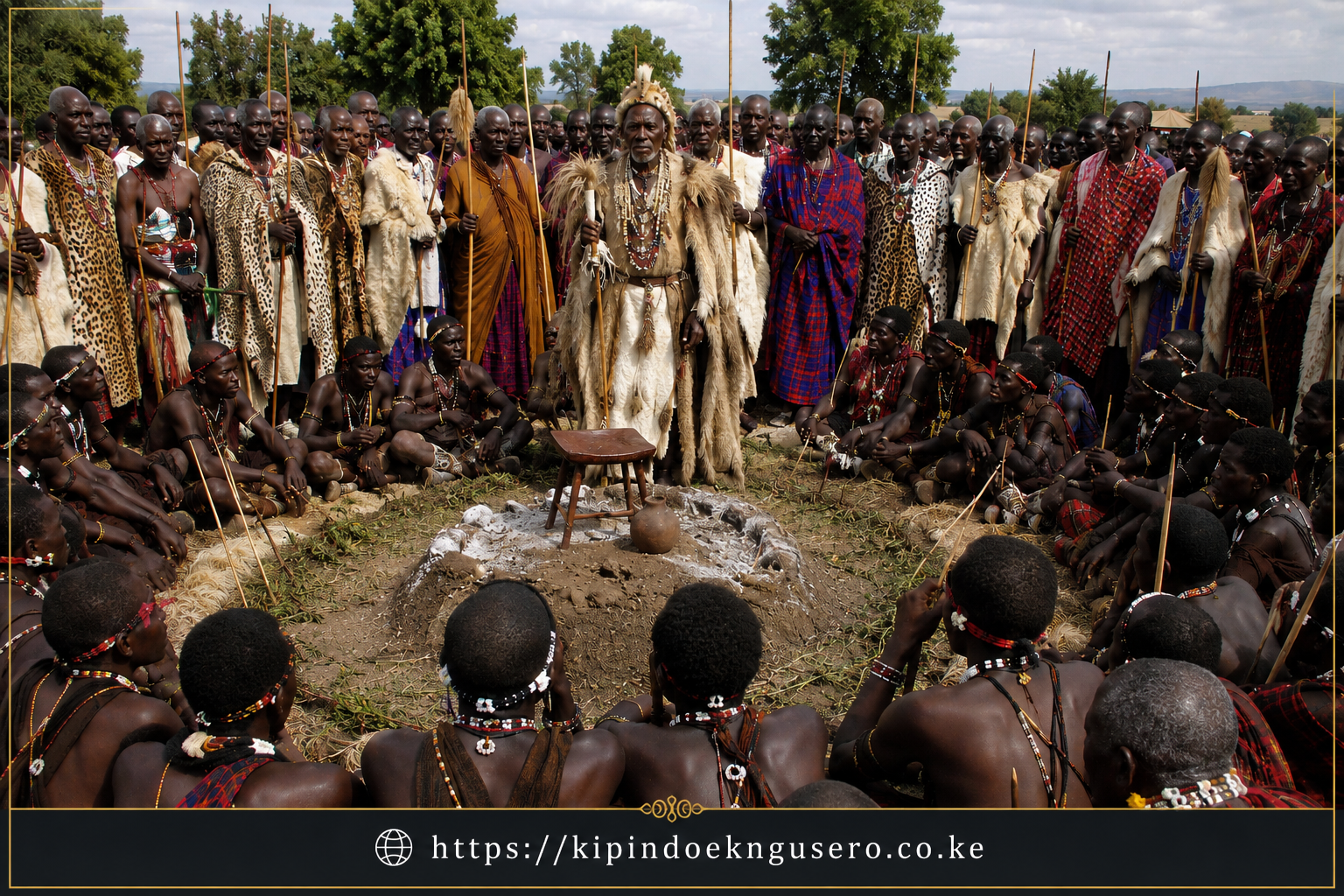
Artistic representation of the sacred Saket-ap-Eito ceremony — where leadership, responsibility, and guardianship passed from one generation to another.
A Ceremony of National Importance
Traditionally, this ceremony occurred approximately every seven to eight years, usually around four years after a major initiation cycle.
It marked the formal moment when one age-set surrendered responsibility for defending the land, and another accepted the sacred duty of protecting the people.
This was not symbolic theatre—it was governance, cultural continuity, and military transition.
The Gathering of Men
On the appointed day, men from across the land gathered at a designated ceremonial site. The atmosphere was solemn, charged with anticipation and cultural dignity.
Participation followed strict rules:
- Adult men attended where possible
- The Orkoiyot (spiritual leader) had to be present
- Married warriors were forbidden from attending
- Married warriors and their wives remained in seclusion
These restrictions emphasized the sacred seriousness of the event.
The White Bull Ceremony
The ceremony opened with the sacrifice of a white bull, purchased by the young warriors for the occasion.
White symbolized purity, sacred transition, and solemn blessing.
After slaughter:
- The meat was eaten by elders
- The hide was carefully used for symbolic rites
Each young warrior cut a small ring from the hide and placed it upon one finger of the right hand—a visible sign of commitment and readiness.
The Circle of Authority
A dramatic ceremonial circle then formed around the Orkoiyot.
Nearby stood a ceremonial stool surrounded by:
- Cow dung
- Fruit of the sacred lapotuet shrub
These were not random objects—they symbolized continuity, fertility, blessing, and connection between the people, livestock, and land.
The Great Handing Over
Then came the defining moment.
The outgoing generation—the warriors whose time had passed—stood before the assembly. In solemn silence, they removed their warrior garments and dressed themselves in elders’ attire.
This act symbolized:
- The end of warrior service
- Transition into elderhood
- Transfer of active national responsibility
The Charge to the New Warriors
The younger warriors—the generation circumcised several years earlier—sat before the assembly awaiting their charge.
They were solemnly entrusted with the safety of the people.
Guard the land of your fathers.
Protect the people.
Carry the safety of the country in your hands.
This was their commissioning.
A Ceremony of Leadership, Not Just Ritual
Saket-ap-Eito was a practical transfer of governance. It reinforced:
- National defense responsibility
- Age-set governance
- Generational succession
- Respect for elders
- Continuity of cultural leadership
Legacy
Though modern governance has replaced traditional age-set administration, Saket-ap-Eito remains one of the most intellectually sophisticated examples of indigenous African governance systems.
It reveals a society that organized leadership, succession, duty, and national identity with remarkable discipline and symbolism.